

2025 Hyundai Tucson SEL around Salmon, ID
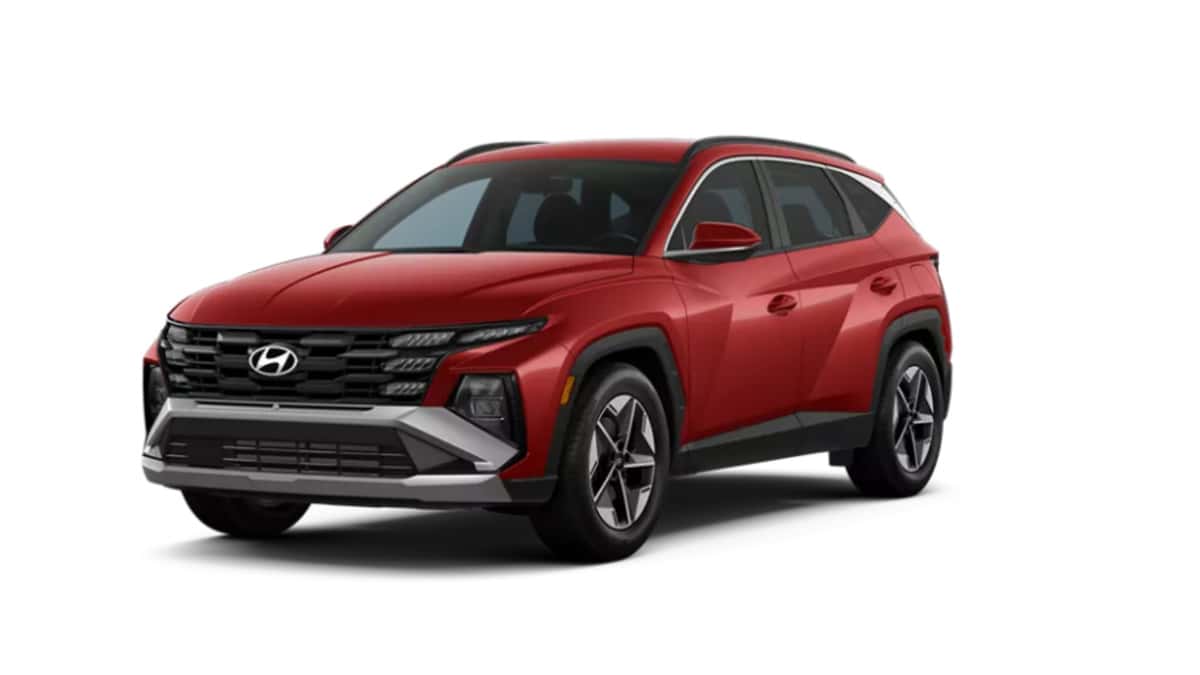
The 2025 Hyundai Tucson SEL is a five-passenger small SUV built around a naturally aspirated gasoline powertrain, an eight-speed automatic transmission, a unibody chassis, and a broad range of comfort, connectivity, utility, and driver-assistance equipment. Its 2.5-liter Smartstream® four-cylinder engine produces 187 horsepower and works with standard front-wheel drive or available HTRAC all-wheel drive. The SEL trim also includes 18-inch alloy wheels, heated front seats, a power-adjustable driver’s seat, dual automatic temperature control, a 12.3-inch touchscreen, and multiple device-connectivity features. Its chassis combines independent front and rear suspension systems with four-wheel disc brakes and Motor-Driven Power Steering. Additional technical areas include cargo flexibility, exterior lighting, driver-information systems, connected technology, active safety functions, and occupant-protection equipment.
Powertrain, Drivetrain, and Chassis Engineering
The 2025 Hyundai Tucson SEL uses a conventional gasoline powertrain supported by an eight-speed torque-converter automatic transmission and a chassis engineered around a unibody structure. Front-wheel drive comes standard, while HTRAC AWD with Active On-Demand operation is available for drivers who want an all-wheel-drive configuration. A center-console-mounted Drive Mode control provides access to selectable vehicle settings through a dedicated interface. Hyundai constructs the 2025 Hyundai Tucson body primarily from Advanced High Strength Steels and high-tensile steel.
Smartstream® 2.5-liter four-cylinder engine
Hyundai equips the gasoline-powered 2025 Hyundai Tucson SEL with a 2.5-liter Smartstream® GDI and MPI DOHC 16-valve inline four-cylinder engine. The engine displaces 2,497 cc and uses an aluminum block and aluminum cylinder head. Continuously Variable Valve Timing manages valve operation, while a Variable Intake System forms part of the engine’s intake configuration. Output measures 187 horsepower at 6,100 rpm and 178 lb-ft of torque at 4,000 rpm. Hyundai specifies regular unleaded fuel, a 13.0:1 compression ratio, Idle Stop & Go, SULEV30 emissions control, and a single-tip exhaust for the 2.5-liter gasoline configuration.
The 2.5-liter engine connects to an eight-speed automatic torque-converter transmission with eight forward ratios. Front-wheel drive is standard on the 2025 Hyundai Tucson SEL, while HTRAC AWD with Active On-Demand operation is optional. Steering-wheel paddle shifters and Shift-By-Wire are available with the 2.5-liter powertrain rather than standard on every gasoline configuration. The transmission uses a 3.648 final gear ratio in both front-wheel-drive and all-wheel-drive applications.
Suspension, steering, and braking systems
The front suspension uses MacPherson® struts with coil springs, a stabilizer bar, and gas-pressurized shock absorbers. Hyundai pairs that front arrangement with a multi-link rear suspension that also includes a stabilizer bar and gas-pressurized shock absorbers. Motor-Driven Power Steering uses a column-mounted rack-and-pinion design with a 13.7:1 overall steering ratio. The steering system requires 2.41 turns from lock to lock and produces a listed curb-to-curb turning diameter of 38.6 feet.
Four-wheel disc brakes provide the 2025 Hyundai Tucson SEL’s primary braking hardware. The front axle uses 12.8-inch ventilated discs measuring 325 mm by 30 mm, while the rear uses 12.0-inch solid discs measuring 300 mm by 10 mm. The Anti-lock Braking System incorporates Electronic Brake-force Distribution and uses four wheels, four channels, and four sensors. Brake Assist, Hillstart Assist Control, and driver-selectable Downhill Brake Control supplement the conventional brake hardware. Hyundai also includes an Electronic Parking Brake with Automatic Vehicle Hold, while Electronic Stability Control, Traction Control, and Vehicle Stability Management provide additional vehicle-control functions.
Exterior Equipment, Dimensions, and Utility
The exterior configuration of the 2025 Hyundai Tucson SEL combines functional lighting, visibility equipment, cargo-access features, and utility hardware with clearly defined dimensions. The gasoline SEL rides on 18 x 7.5J alloy wheels fitted with 245/60R18 tires. A compact temporary spare tire is standard on the gasoline SEL. The body measures 182.7 inches long and 73.4 inches wide, while the wheelbase measures 108.5 inches. Overall height with roof rails measures 65.6 inches with front-wheel drive and 66.3 inches with all-wheel drive.
Lighting, mirrors, glass, and visibility
Bi-LED headlights with high- and low-beam functions come standard on the 2025 Hyundai Tucson SEL. Hyundai also includes LED front turn signals, LED Daytime Running Lights, automatic headlights, and High Beam Assist. A roof-mounted center high-mount stop lamp adds another rear lighting element. Heated body-color side mirrors are standard, and the mirrors include indicators associated with Blind-Spot Collision Warning and Rear Cross-Traffic Collision-Avoidance Assist. Turn-signal indicators integrated into the side mirrors remain available equipment on the SEL.
The 2025 Hyundai Tucson SEL uses privacy glass for the rear, quarter, and back glass areas, while solar glass is fitted to the front doors and windshield. An acoustic laminated windshield also comes standard. Front aero wipers provide the primary windshield-clearing function, supported by variable intermittent operation. An intermittent rear-window wiper and washer serve the rear glass.
Exterior utility and cargo access
Roof side rails come standard on the 2025 Hyundai Tucson SEL and support a listed roof-rail load capacity of 220 pounds. Roof cross rails are available as additional equipment. A hands-free Smart Liftgate with automatic opening and an adjustable height setting comes standard, providing powered access to the rear cargo area. Trailer pre-wiring is also standard, while a tow hitch is available for the SEL. The 2025 Hyundai Tucson line carries a listed maximum trailer weight of 2,000 pounds with trailer brakes and 1,650 pounds without trailer brakes.
Other exterior details include body-color bumpers, black side-sill material, chrome upper door-window molding, and body-color door handles. A body-color rear spoiler integrates the center high-mount stop lamp into the rear exterior design. Hyundai also equips the vehicle with a shark-fin roof antenna. The SEL retains a functional exterior configuration rather than relying only on appearance-oriented equipment. Its roof rails, liftgate, trailer pre-wiring, available hitch, and cargo-related hardware directly support transportation and loading tasks.
Passenger Comfort, Seating, and Cargo Flexibility
The cabin of the 2025 Hyundai Tucson SEL accommodates five passengers and combines adjustable seating, rear-seat flexibility, climate management, storage, and device-charging equipment. Standard cloth-trimmed seats use stain- and odor-resistant material, while H-Tex® leatherette seating is available. The driver’s seat uses eight-way power adjustment and includes power lumbar support. Three-step heated front seats come standard on the SEL. The rear seat uses a 60/40 split-folding and reclining design with adjustable head restraints, allowing the cabin to adapt to different combinations of passengers and cargo.
Passenger dimensions and seating functions
Gasoline 2025 Hyundai Tucson models provide 41.4 inches of front legroom and 41.3 inches of rear legroom. Shoulder room measures 57.6 inches in front and 56.0 inches in the second row, while hip room measures 54.5 inches and 53.9 inches, respectively. Without a sunroof, front headroom measures 40.1 inches and rear headroom measures 39.5 inches. Models equipped with the conventional sunroof provide 38.3 inches of front headroom and 39.5 inches of rear headroom. Passenger interior volume without the panoramic sunroof measures 108.2 cubic feet for gasoline-powered 2025 Hyundai Tucson models.
The rear seating arrangement adds useful flexibility to these passenger dimensions. Its 60/40 split-folding configuration allows one portion of the second row to remain upright while the other is lowered for additional cargo space. The rear seatbacks also recline, giving rear passengers an additional seating adjustment. Remote-release controls allow the rear seats to fold from the cargo area rather than requiring direct access to the seatbacks. A dual-level cargo floor further supports different loading arrangements within the rear compartment.
Cargo volume and storage equipment
Gasoline 2025 Hyundai Tucson models provide 38.7 cubic feet of SAE cargo capacity with the rear seats upright, along with a listed maximum cargo volume of 41.2 cubic feet in that configuration. Folding the rear seats increases SAE cargo capacity to 74.8 cubic feet. Hyundai lists maximum cargo volume with the rear seats folded at 80.3 cubic feet. Six cargo tie-down anchors provide dedicated attachment points, with three positioned on each side of the cargo area. A second-row seatback bag hook and an available retractable cargo cover add further cargo-management functionality.
Interior storage equipment extends beyond the main cargo compartment. The front center console includes a fixed-armrest storage box, while dual cupholders sit in the front center console. Rear passengers receive a center armrest with cupholders, and the cabin also includes four assist grips and a rear coat hanger. The glove compartment incorporates a damper, while a storage tray sits below the 12-volt outlet. Two 12-volt outlets are provided in total, with one positioned at the front of the cabin and one in the cargo area.
Climate control and driver comfort
Dual automatic temperature control comes standard on the 2025 Hyundai Tucson SEL and incorporates Auto Defogger functionality. The system uses capacitive-touch controls along with physical knobs for temperature adjustment. After-Blow logic, a cabin air filter, external-temperature information, rear-seat heater ducts, and floor-console-mounted rear air-conditioning vents are also standard. A rear-window defroster with a timer provides additional climate-related visibility support.
The three-spoke steering wheel includes tilt and telescoping adjustment for driver positioning. Audio controls provide volume, mute, seek, and mode functions directly from the wheel, while Bluetooth® controls handle voice recognition and telephone functions. Cruise-control switches are also integrated into the steering wheel. A leather-wrapped steering wheel is available on the SEL. Standard proximity-key entry with push-button start, illuminated sunvisors, front automatic up-and-down power-window controls, and 15-watt wireless device charging add further convenience.
Infotainment, Connectivity, and Driver Information
The 2025 Hyundai Tucson SEL integrates digital displays, smartphone connectivity, connected-car functions, charging hardware, and vehicle-information systems throughout the cabin. A 12.3-inch color touchscreen comes standard with AM/FM radio, HD Radio®, SiriusXM® Satellite Radio capability, and a six-speaker audio system. Wireless Apple CarPlay® and Android Auto™ provide compatible smartphone integration without requiring a wired connection for those interfaces. Bluelink® Connected Car System functionality also comes standard. Hyundai supplements these systems with over-the-air controller update capability and Hyundai Digital Key 2 Premium functionality using NFC, BLE, and UWB-type technologies.
Touchscreen, smartphone integration, and charging
The standard 12.3-inch touchscreen serves as the central interface for the SEL’s multimedia functions. Wireless Apple CarPlay® and Android Auto™ allow compatible smartphones to connect with the infotainment system. HD Radio® and SiriusXM® functionality broaden the audio-source options available through the system. A rearview camera displays through the vehicle’s screen and assists with rearward visibility during reversing maneuvers. An available 12.3-inch touchscreen configuration with onboard navigation adds further infotainment capability to selected SEL equipment combinations.
Two USB Type-C ports are positioned at the front of the cabin. One supports both data transfer and charging, while the second functions as a charging port with up to 27 watts of power. The second row receives two additional USB ports with 27-watt charging capability. A standard 15-watt wireless device charger provides another way to replenish compatible devices without connecting a charging cable.
Instrumentation and access technology
The standard instrument layout uses a 4.2-inch Multi-Information Display along with a speedometer, tachometer, coolant-temperature display, fuel-level display, digital odometer, and trip odometer. The instrumentation also displays transmission position and gear information in manual mode. An available 12.3-inch digital instrument cluster expands the display area for vehicle information. Indicators cover systems such as Smart Cruise Control, High Beam Assist, parking brake status, and multiple driver-assistance functions. Adjustable illumination allows the driver to change instrument-light intensity.
Proximity keys with detachable valet keys come standard on the SEL. Hyundai Digital Key 2 Premium adds NFC, Bluetooth® Low Energy, and Ultra-Wideband functionality to the vehicle’s access technology. Push-button start is standard and receives illuminated trim within the cabin. Power door locks and a remote keyless entry system with alarm and panic functions are also included.
Safety and Driver-Assistance Systems
The safety configuration of the 2025 Hyundai Tucson SEL combines collision-avoidance technology, lane-support systems, stability controls, occupant restraints, and security equipment. Standard systems address frontal hazards, blind spots, cross traffic, lane positioning, driver attention, speed-limit information, and vehicle exit conditions. Smart Cruise Control with Stop & Go adds speed and following-distance assistance during applicable driving situations. Several additional driver-assistance technologies remain available on the SEL through specific equipment configurations. The vehicle also carries an extensive restraint system that includes front, side, curtain, and rear-side airbags.
Collision avoidance and lane support
Forward Collision-Avoidance Assist comes standard with pedestrian, cyclist, and junction-turning detection using a sensor-fusion-type configuration. Blind-Spot Collision Warning monitors adjacent areas, while Rear Cross-Traffic Collision-Avoidance Assist addresses crossing traffic when the vehicle is reversing. Driver Attention Warning and Safe Exit Warning add monitoring functions for driver behavior and vehicle-exit situations. Lane Keeping Assist and Lane Following Assist provide steering-related lane-support functions. Steering-wheel haptic feedback accompanies the lane and blind-spot assistance systems listed for the vehicle.
Intelligent Speed Limit Assist is also standard on the 2025 Hyundai Tucson SEL. Smart Cruise Control with Stop & Go manages cruising functionality and can operate across varying traffic speeds within its designed operating conditions. Highway Driving Assist 1 and Navigation-based Smart Cruise Control with Curve Control are available on selected SEL configurations. Forward Attention Warning and an Advanced Rear Occupant Alert are also available, while the standard Rear Occupant Alert provides another occupant-awareness function. These technologies broaden the vehicle’s driver-assistance coverage across forward travel, lane positioning, following distance, rearward movement, and occupant monitoring.
Occupant protection and vehicle stability
The restraint system includes advanced front airbags for the driver and front passenger. Driver and front-passenger side-impact thorax airbags supplement the frontal restraints, while side-curtain airbags protect front and rear occupants and incorporate rollover sensors. Rear side airbags provide additional protection for second-row occupants. An Occupant Classification System uses a seat-weight sensor and seat-track sensor as part of the passenger-restraint system. The vehicle also includes a five-position seatbelt reminder and adjustable front-seat shoulder-belt anchors.
Three-point ELR seatbelts are fitted to the outboard seating positions and the rear inboard seating position. Front and rear outboard seatbelts incorporate pretensioners and load limiters. LATCH lower anchors and upper tether anchors support compatible child-restraint installation, while rear child-safety locks and a power-window lockout button add additional passenger-security functions. Bodyside reinforcements contribute to the passive safety structure, and an immobilizer works with the anti-theft system integrated into the remote keyless entry and panic-alarm functions. Tire Pressure Monitoring with individual tire indication, Anti-lock Braking, Electronic Stability Control, Traction Control, Brake Assist, and Vehicle Stability Management extend the safety package into tire, braking, and chassis-control systems.
Visit Salmon River Quality Motors around Salmon, ID
The 2025 Hyundai Tucson SEL combines a 187-horsepower 2.5-liter engine, an eight-speed automatic transmission, independent suspension, four-wheel disc brakes, and available HTRAC AWD with a substantial range of comfort and technology equipment. A test drive provides an opportunity to assess its steering response, braking behavior, seating position, heated front seats, dual-zone climate controls, touchscreen interface, cargo access, and driver-assistance features together. We can also demonstrate the operation of its smartphone connectivity, digital access features, Smart Cruise Control, lane-support systems, and hands-free Smart Liftgate during your visit. Schedule a test drive with Salmon River Quality Motors around Salmon, ID, to examine the 2025 Hyundai Tucson SEL’s performance, technology, comfort, handling, utility, and safety equipment directly. Our team can help explain the vehicle’s functional controls and available equipment so you can evaluate the configuration in a practical driving setting.